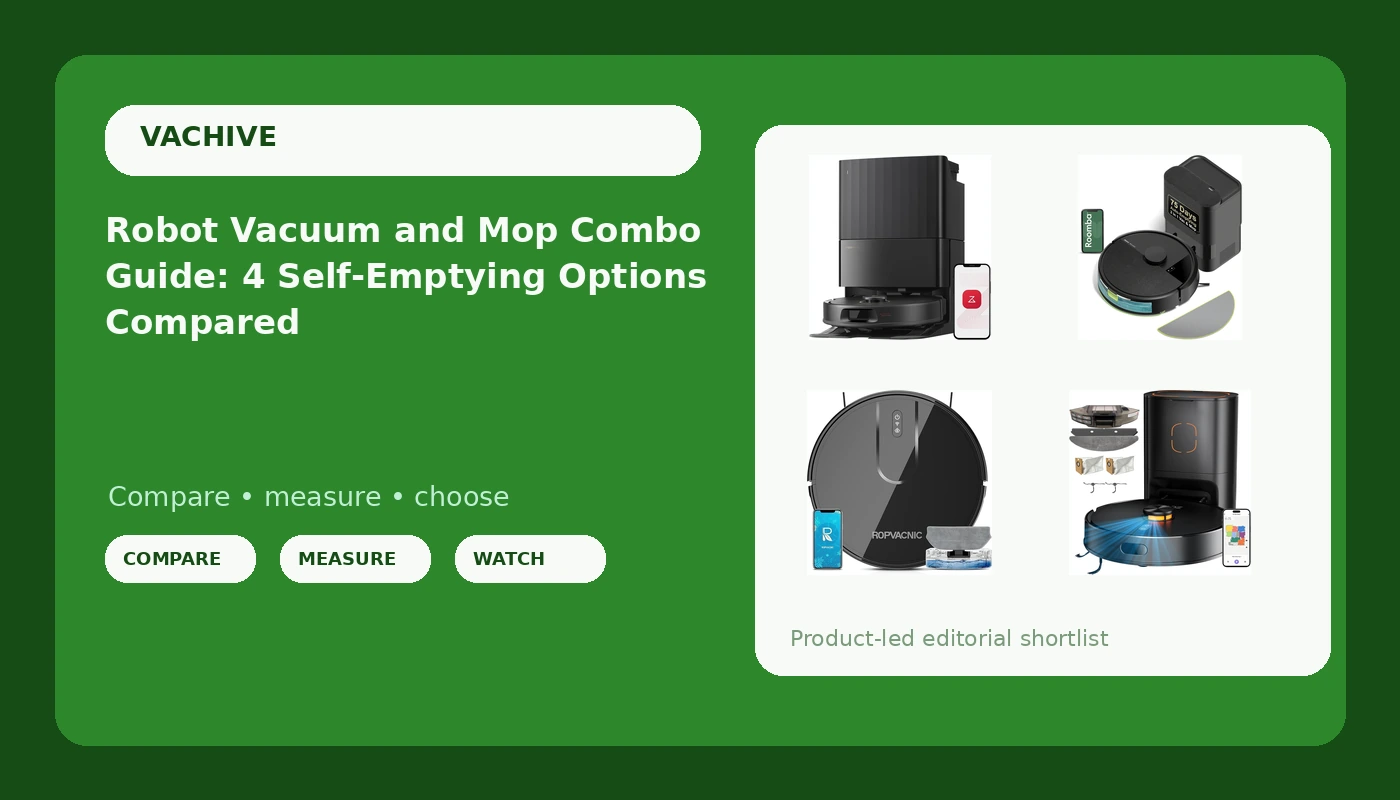
A robot vacuum and mop combo is two appliances sharing one chassis and one dock: a vacuum with a brush roll and a dustbin, plus a mopping element that either spins a pad, drags a cloth, or vibrates against the floor. The combination is genuinely convenient, and it is also where most buyer disappointment starts. One machine has to vacuum well enough to justify the floor space it occupies, mop well enough to be worth filling, and stay easy enough to maintain that you keep running it after the novelty wears off.
The realistic question is not which robot vacuum and mop combo has the biggest number printed on the box. It is which one fits the floors you actually live on. A house with two dogs, low-pile rugs in every room, and a nest of charging cables behind the couch asks something very different from a small apartment with sealed hardwood and one bath mat. The four units below span that range, from an entry-level cleaner to a model whose mopping arm extends out toward the baseboard instead of stopping an inch short.
What follows is not a scoreboard. It is a breakdown of what each machine is built to do, what its listed specifications can and cannot tell you, and how to decide before the return window closes.
Related: Robot Vacuum Navigation Explained: LiDAR, dToF, and Camera Mapping →
Quick answer
Match the dock and the mop design to your floors first, then compare everything else. The roborock Qrevo S5V is the model in this set whose headline feature is mopping reach, using a FlexiArm that extends the mop toward edges and corners. The iRobot Roomba 105 Combo pairs a self-emptying AutoEmpty dock rated for 75 days with LiDAR navigation and a mode that avoids mopping carpet. The 10000Pa dToF model combines the longest self-empty interval documented here at 90 days with a listed 160-minute runtime and an anti-tangle brush. The ROPVACNIC 5200Pa unit is the entry point, with no self-emptying dock in its listed specifications, which means the bin is your job.
4 useful options
| Model | Best fit | What stands out |
|---|---|---|
| roborock Qrevo S5V Robot Vacuum and Mop, FlexiArm Edge Mopping | Homes where mopping along baseboards and corners matters | FlexiArm edge mopping that extends beyond the chassis |
| iRobot Roomba 105 Combo Robot Vacuum & Mop with AutoEmpty Dock | Carpet-heavy homes that want bin duty offloaded | AutoEmpty dock rated for 75 days, LiDAR navigation, avoids mopping carpet |
| Robot Vacuum and Mop Combo, 90-Day Self Emptying, 10000Pa Strong Suction, dToF Laser Navigation | Large floors and long stretches between dock visits | 90-day self-empty dock, 10000Pa rating, 160-minute listed runtime, anti-tangle design |
| ROPVACNIC Robot Vacuum and Mop Combo 5200Pa Suction Robotic Cleaner | First robot vacuum on a tight budget | 5200Pa suction rating in a vacuum and mop combo, no dock in the listed specs |
Edge-mopping pick: roborock Qrevo S5V Robot Vacuum and Mop, FlexiArm Edge Mopping
Edge cleaning is the least glamorous spec and one of the most visible in daily life. Most mopping robots leave a strip along the baseboard that you eventually notice, usually while standing in the kitchen barefoot. An extending arm addresses exactly that strip, which is why this unit sits at the top of this list. The trade-off is that an extending mechanism is one more moving part to keep free of hair and grit, and its dock and pad system still need the same routine care as any other combo: rinse the pad, clear the brush, and check the filter.
Carpet-aware combo pick: iRobot Roomba 105 Combo Robot Vacuum & Mop with AutoEmpty Dock
The carpet-avoidance behavior matters more than it sounds. On a combo, the mopping hardware is either raised, retracted, or blocked from carpet, and a machine that fails at that job leaves damp patches on a rug you then have to dry. If your home mixes hard floor and carpet and you want the robot to work unsupervised, this is the design to compare against. The 75-day dock rating also means the day-to-day chore shrinks to checking the brush and pad rather than emptying a bin after every run. Note that dock bags are a recurring supply cost, and the 75-day figure assumes a workload the manufacturer describes, not one measured in your house.
Long-runtime self-emptying pick: Robot Vacuum and Mop Combo, 90-Day Self Emptying, 10000Pa Strong Suction
Runtime and dock interval are the two specs that quietly decide whether a robot finishes the job. A machine that runs out of charge halfway through a large floor plan leaves you with half a house and no clear signal about which half. A 160-minute listing that is generous on paper still depends on mode, floor surface, and how often the robot climbs onto a rug, so treat it as a ceiling rather than a promise. The anti-tangle claim is worth attention for anyone with long hair or a shedding pet, since a wrapped brush roll is the most common reason a robot starts leaving lines in the carpet.
Entry-level pick: ROPVACNIC Robot Vacuum and Mop Combo 5200Pa Suction Robotic Cleaner
The absence of a dock is the real story here, not the suction number. Without self-emptying, the robot only keeps a house clean if you empty the bin on a schedule you set yourself, which is the habit most people drop in week three. That does not make the machine useless. In a small apartment with minimal carpet and no pets, a bin that fills slowly is easy to manage, and the lower entry cost lets you find out whether you actually run a robot daily before spending more. If you have shedding pets or wall-to-wall carpet, this is the configuration most likely to frustrate you.
Prices and availability may change. Product images, names, and retailer links must be matched by verified ASIN. Do not state a current price, rating, stock status, or measured result without current evidence.
What a suction rating in pascals does and does not tell you
Pascals measure the suction pressure a vacuum can generate in a sealed test setup. They do not measure how much debris reaches the bin in a living room. Pickup depends on airflow, how well the brush roll agitates the carpet, how tightly the cleaning head seals against the floor, and how long the robot keeps working before the battery fades. That is why a machine with a lower pascal rating can outperform a higher-rated one on a specific floor, and why the listed figures in this comparison, 5200Pa and 10000Pa, should be read as manufacturer claims about suction rather than as predicted cleaning results.
Two practical points follow. First, a higher rating tends to matter most on carpet, where debris sits below the surface and needs agitation plus airflow to lift. Second, on hard floor with light dust, almost any modern combo picks up what is there, so paying for suction alone is a poor use of budget. Bin volume, filter quality, and whether the brush resists tangling affect your weekly routine far more than the number on the box.
What a self-emptying dock changes about your week
A self-emptying dock pulls debris from the robot bin into a larger, often sealed container or bag. The change is not about cleaning quality. It is about how often you touch the machine. A robot without a dock typically wants emptying after most full runs, and the job involves bending, unclipping, and sometimes a dust cloud. A dock rated for 75 or 90 days moves that chore to a monthly or quarterly rhythm, which is the difference between a robot that runs daily and one that gets used when you remember.
Docks also bring costs and constraints. Replacement bags or filters are a recurring purchase, docks take up floor space and need clearance, and the base itself needs occasional cleaning because fine dust escapes around the seals. The interval figures come from the manufacturer and assume a particular debris load. A home with two heavy-shedding dogs will fill a dock bag faster than the rating suggests, and that is normal rather than a defect.
Whatever you buy, the first two weeks decide whether the robot earns its dock. Work through this sequence:
- Clear the floor completely for the first mapping run, including cords, socks, and pet toys, so the map reflects the real layout.
- Set no-go zones for cable runs, pet bowls, and any rug with tassels or a fringe that can be swallowed.
- Schedule a daily pass at a time when the house is quiet, then let the robot run the same route for a full week before judging it.
- Read the dustbin after each run for the first week. What is in the bin tells you which rooms the robot is actually reaching.
- Walk the perimeter and check rug transitions yourself, then either block the problem threshold or accept it as a manual-vacuum zone.
Keeping a combo running between dock empties
- Check the brush roll weekly and cut away wrapped hair before it flattens the bristles and starts leaving lines.
- Rinse or replace the mop pad on the schedule the manufacturer lists, and never leave a wet pad in the dock for days at a time.
- Tap out and rinse the filter monthly, and replace it when airflow drops or the exhaust starts smelling like dust.
- Keep the dock clearance area free of clutter so the robot can find its base without hunting.
- Empty or check the dock container on your own calendar rather than trusting the maximum interval, especially in a home with pets.
Which option should you choose?
Choose the roborock Qrevo S5V Robot Vacuum and Mop when mopping along baseboards and into corners is the part of the job that bothers you most, and you want the mopping element to extend rather than stop short. Choose the iRobot Roomba 105 Combo when carpet and rugs make up a meaningful share of your floors and you want a dock that self-empties for 75 days plus a mode that avoids mopping carpet. Choose the Robot Vacuum and Mop Combo with the 90-day self-empty dock and 10000Pa rating when you have a large floor plan, want the longest documented self-empty interval here, and value the listed 160-minute runtime and anti-tangle design. Choose the ROPVACNIC 5200Pa combo when you want to test whether a robot fits your routine at the lowest entry point, and you are willing to empty a bin yourself.
A caveat on all four: the specifications above come from manufacturer listings, not from a measured comparison across identical floor plans. Suction ratings, dock intervals, and runtime figures are claims made under stated conditions. Your carpet pile, furniture layout, and threshold heights will move the result in ways no spec sheet captures, which is why the return window matters as much as the feature list.
The bottom line
The right robot vacuum and mop combo is the one whose weakest feature you can live with. If edge mopping is your complaint, the roborock Qrevo S5V addresses it directly with its extending FlexiArm. If carpet is the majority surface and you want the bin handled, the iRobot Roomba 105 Combo pairs a 75-day self-emptying dock with carpet avoidance. If runtime and a 90-day dock interval top your list, the 10000Pa dToF model is built for that. And if the goal is simply to see whether a robot earns a place in your routine, the ROPVACNIC 5200Pa combo keeps the entry point low while leaving the bin in your hands. Whichever you pick, plan on the maintenance, because that habit, not the suction rating, is what keeps floors cleaner than they would be otherwise.