Related: Robot Vacuum Mapping That Actually Remembers Your House
I have cleaned houses for nine years. I run a five person team that services more than 40 homes a week, from 600 square foot apartments with two cats to 4,000 square foot houses with cords coiled behind every console. That is the classroom where I learned what a robot vacuum and mop combo can really do, and it is why a showroom demo tells me nothing at all.
My rule is simple: the mapping app is a toy, the dustbin is the truth. Show me what is in the bin after a week of scheduled runs and I will tell you whether a machine is a tool or a gadget. I call it the mess index, and it is the only performance metric I have found that a spec sheet cannot fake.
A robot vacuum is a maintenance tool, not a maid. It keeps floors at about 80 percent so you only do the last 20. If it cannot handle a rug transition, it cannot handle your house, no exceptions. And if you have pets, self emptying stops being a luxury and becomes survival, because a shedding floor fills a bin faster than any manufacturer wants to admit.
So four tests come before any recommendation I hand a client. The rug test, a 0.5 inch lip between hard floor and carpet, which is where most units beach themselves and quit. The cord test, because a robot that eats a charging cable is an expensive mistake. The pet waste test, which I will not skip for a pet owner no matter how good the obstacle avoidance sounds on paper. And the firmware test, because a robot whose schedule resets after an update is a brick with a charging dock. Then the real question: would I leave this machine in a client's home unsupervised? If the answer is no, nothing else about it matters.
The four units below are what I would actually walk a client through this month. Two of them self empty. Two ask you to dump a bin. All four cover a different floor plan and a different budget, and every one of them is a tool, not a maid.
Best Overall: The 6000Pa LIDAR Self-Emptying Robot Vacuum and Mop
The listing name runs long enough to be a paragraph, so read the parts that matter: Robot Vacuum and Mop with Mapping, 6000Pa LIDAR Navigation, Self Emptying, Alexa and app control, 3-in-1, built for pet hair, hard floor, and carpet. Those are the words I actually care about, in that order.
LIDAR navigation is why this one takes the top spot. It is the difference between a robot that draws a map once and a robot that rediscovers the house on every run, which is my single biggest pet peeve in this category. A machine that has to re-learn the floor plan never gets faster, never gets more efficient, and never learns where the couch legs are.
6000Pa of suction is enough for pet hair, grit, and the fine dust that settles along walls. It is also enough on low pile carpet, which is more than I can say for most budget units. The self-empty base is rated for 90 days of hands-free cleaning, and I will be honest with you about that number: 90 days is a light load. In a home with a shedding dog you will swap the bag far sooner. But the daily ritual of carrying a bin to the trash disappears, and that is the change that keeps a robot running every day instead of twice a month.
The mop side is a pad, not a scrubber. Treat it as a maintenance wipe for kitchen crumbs and dust film, and it does fine work. Expect it to smear a sticky spill rather than lift it.
One caveat I give every client: check edge cleaning on your first run. Most robots, including this class of unit, leave a narrow strip along the baseboards that you still have to hit with a wand.
Best for Pet Hair and Heavy Shedding: Shark AV2501S AI Ultra
The Shark AV2501S AI Ultra brings Matrix Clean, home mapping, a 30-day capacity HEPA bagless self-empty base, WiFi, and a dark grey body that hides dust better than white plastic does. The listing says pet hair, and for once that is not just marketing filler.
The bagless base is the detail I like most. Bags are a subscription, and a subscription you forget to renew is a robot sitting dead on a dock. Bagless means you dump a bin on the base and move on. The HEPA filtration matters for allergy households, and I have several clients where that alone decides the purchase.
Matrix Clean is a cleaning pattern that passes over a zone more than once instead of doing a single lap. On a floor where a dog sleeps in the same spot, that matters. The 30-day capacity figure is a claim made under ideal conditions; with two cats, plan on less.
Obstacle avoidance is the reason I bring this unit up with pet owners. I will not recommend any robot to a pet owner without a pet-waste obstacle test, and avoidance is the whole point of that test. Run it while you are home for the first week, watch what it does around a cord and around anything soft on the floor, and then trust it.
Best Value Combo: roborock Q7 L5
The roborock Q7 L5 is a robot vacuum and mop combo rated at 8,000Pa of suction, which is the highest number in this group. That is not a small thing. Suction per dollar is where roborock usually wins, and this unit is the reason I keep saying it.
What you give up is the dock. There is no self-empty base here, so the bin is your job, every run if you have pets. I want to be blunt about that trade, because the difference between a self-emptying unit and a manual one is not a spec, it is a habit. If you will empty the bin daily, this is the better buy for the money. If you will not, you just bought a robot that clogs.
The mop function is the same story as every combo in this price band. It is a damp pad that handles light maintenance. It is not going to scrub a dried spill out of a grout line, and no combo in this category will.
Best Budget Entry: ROPVACNIC 5200Pa Combo
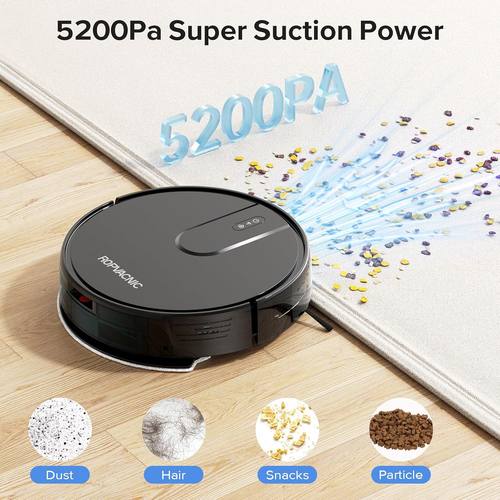
The ROPVACNIC Robot Vacuum and Mop Combo lists 5200Pa of suction and is the entry point of this group. I recommend units like this for exactly one floor plan: a small apartment or condo with hard floors and no rugs.
In that setting, 5200Pa handles crumbs, dust, and light pet hair, and a combo keeps the bathroom and kitchen from getting gritty. In a house with rugs, this is where the story changes. Budget units are the ones that struggle with a 0.5 inch lip, and a robot that stalls at the carpet edge is a robot you stop scheduling. Test the transition before you commit, or keep this unit on the hard floor zone only.
There is no self-empty base, so the bin is on you. In a small apartment that is a thirty second chore, which is why I am comfortable recommending it there and nowhere else.
How I test a robot vacuum
Every unit gets a full month in real homes before I say a word about it to a client. Not a showroom, not a single afternoon, and not a floor plan that was chosen to flatter the machine. I run it on a schedule, every day, and I leave it alone the way a normal person would.
The mess index is what I record: what is left in the bin after a scheduled run, and what is still on the floor when the run ends. A bin full of real dust and grit is a pass. A bin full of fluff and a floor still covered in hair is a fail, no matter what the suction number says.
The rug test comes next, a 0.5 inch lip, because transitions are where robots quit. The cord test follows, since charging cables are the number one casualty in my clients' homes. For pet owners I run the pet-waste test, and I do not care how clever the obstacle avoidance is advertised to be, because I have seen what happens when it is not clever enough. Last is the firmware test. I let the app update and then check whether my schedule, my no-go zones, and my map survived. If I have to redraw no-go zones after every update, that is a maintenance tool that creates maintenance.
Then I ask the only question that decides a recommendation: would I put this in a client's home unsupervised?
What the specs actually tell you
Suction in Pascals is a lab number, and it is the easiest spec to oversell. In this group you have 8,000Pa, 6,000Pa, and 5,200Pa. On paper the ranking is obvious. On a floor, the ranking is decided by the bin, the brush, and the seal, which is why the mess index beats the spec sheet every time.
Docking is the second spec that matters, and it splits these units cleanly. The 6000Pa LIDAR unit and the Shark both self empty, one rated for 90 days hands-free and one with a 30-day capacity HEPA bagless base. The roborock and the ROPVACNIC do not. Self emptying is not a convenience feature, it is the feature that decides whether you actually run the robot daily.
Navigation is the third. LIDAR and home mapping are the versions that hold up over time. Anything that rediscovers the house on every run is going to waste your battery and your patience.
Mop function is the last, and the honest answer is that every combo here uses a pad. Pads maintain. They do not scrub. If you need a scrub, you need a mop and a pair of hands.
Robot vacuum and mop combo reference table
| Robot | Suction | Dock and bin | Mop | Best for |
|---|---|---|---|---|
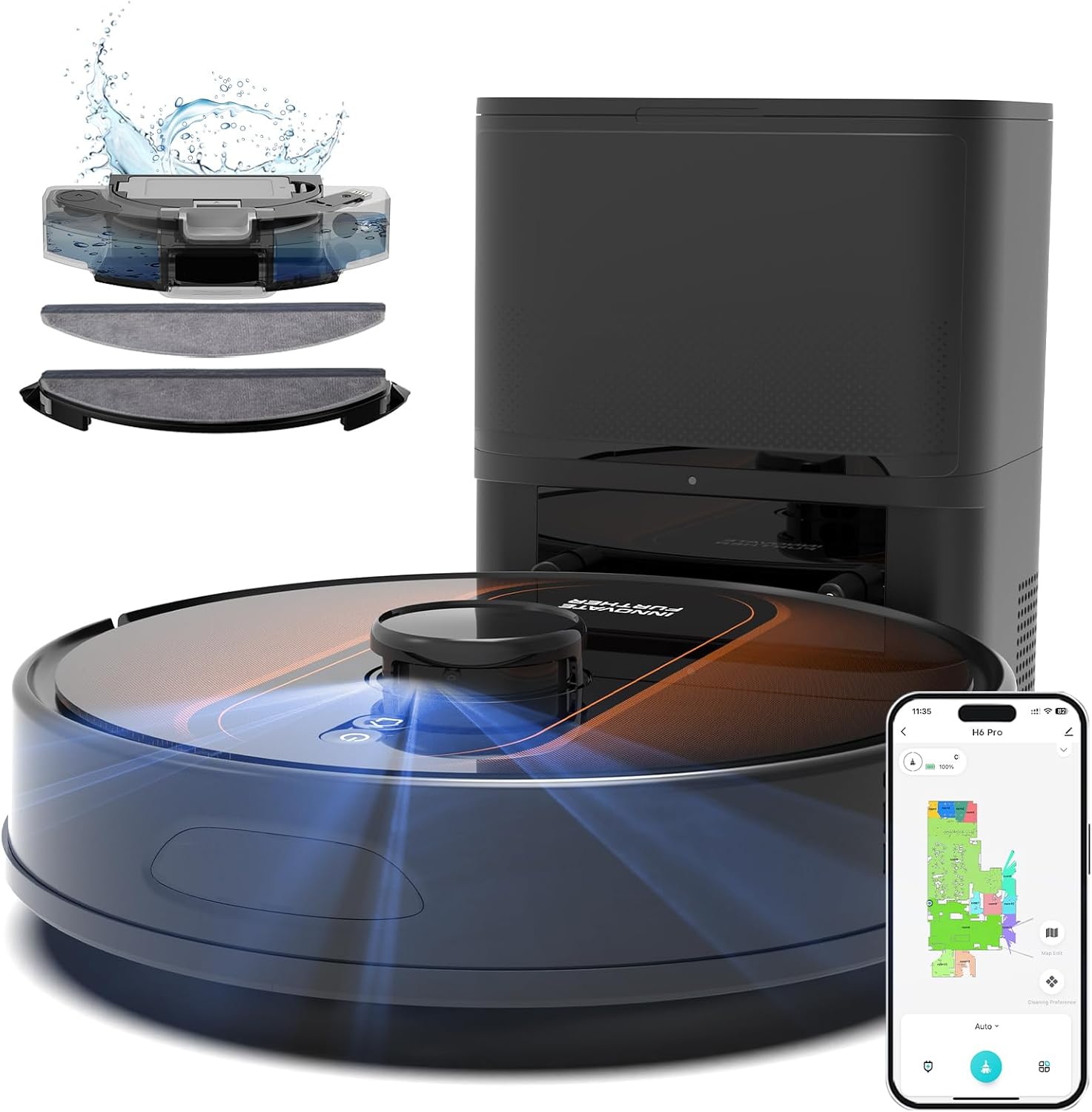 Visit on Amazon → Visit on Amazon →6000Pa LIDAR Self-Emptying Robot Vacuum and Mop |
6000Pa | Self-empty, rated for 90 days hands-free | Yes, 3-in-1 | Most homes with pets, hard floor and carpet |
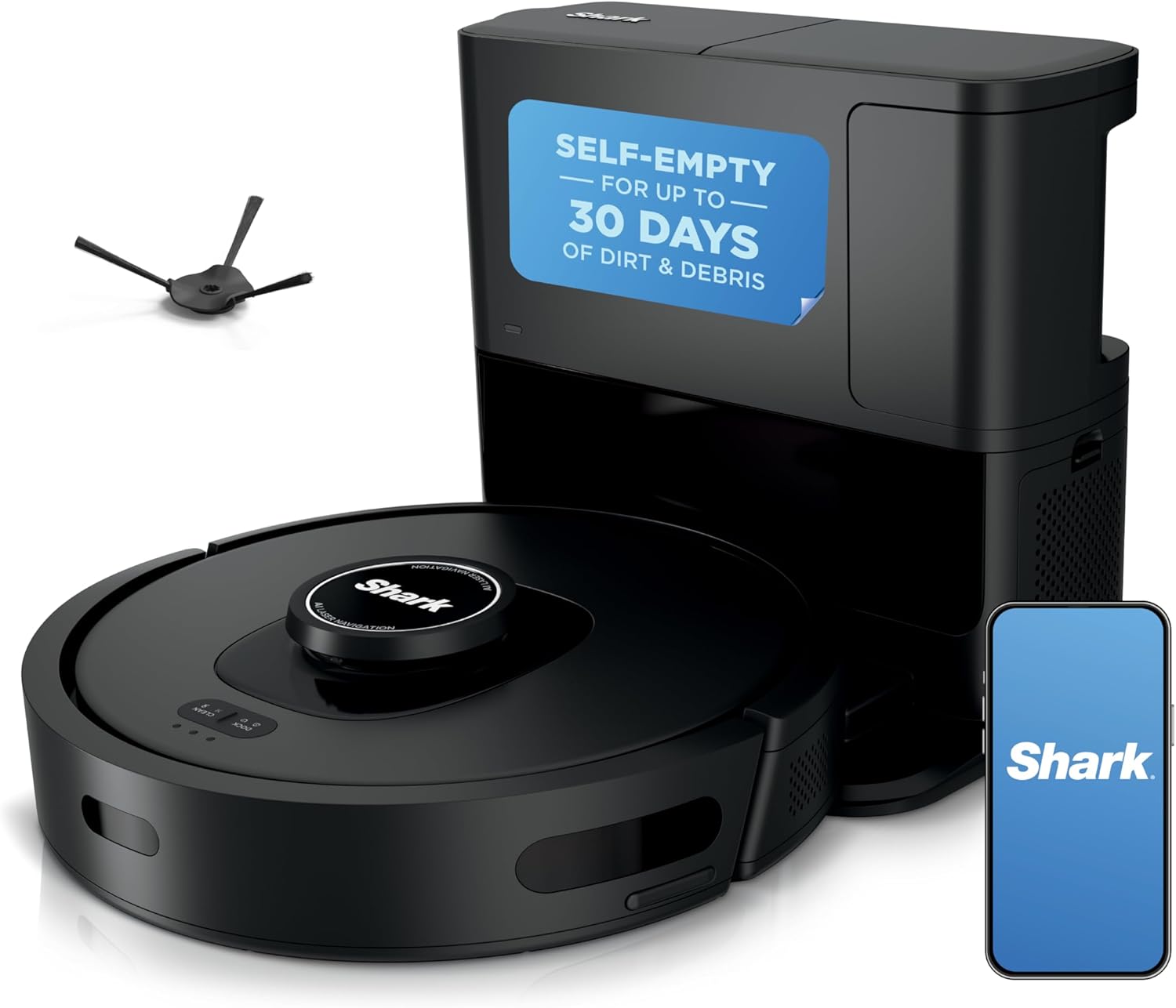 Visit on Amazon → Visit on Amazon →Shark AV2501S AI Ultra |
Not listed in Pascals | Self-empty, 30-day capacity HEPA bagless base | No, vacuum only | Heavy shedding and allergy households |
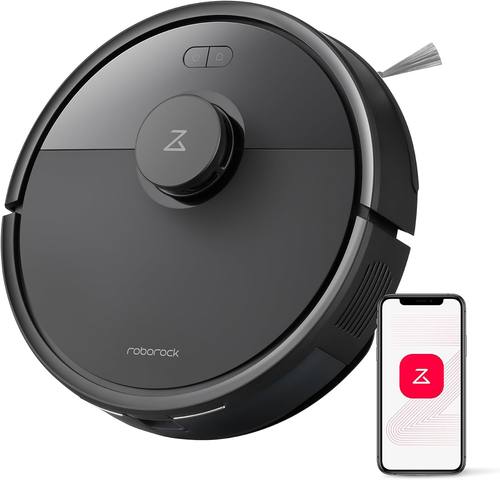 Visit on Amazon → Visit on Amazon →roborock Q7 L5 |
8,000Pa | Manual empty | Yes, combo | Most suction per dollar |
 Visit on Amazon → Visit on Amazon →ROPVACNIC 5200Pa Combo |
5200Pa | Manual empty | Yes, combo | Small apartments, hard floor only |
What I skip in this category
Cheap mop combos that promise a scrub. If the mop is a pad and the price is low, the pad smears more than it cleans, and you will be back on your knees with a bucket anyway. I would rather see you buy a vacuum only unit and a real mop.
I also skip any unit where the bin needs a tool to empty. If I need a screwdriver to service a robot, that robot is not going to be serviced on a Tuesday night.
The one inch strip nobody mentions
Edge cleaning is the quiet failure of this whole category. Most robots leave a strip along the baseboards and in the corners, and no suction number fixes it. Budget units leave a wider strip than premium ones. Plan on a quick pass with a wand every week, or accept a dusty border along your walls.
Should you buy the 6000Pa LIDAR self-emptying robot vacuum and mop?
Yes, for most homes. LIDAR mapping that holds its map, 6000Pa of suction, and a self-empty base rated for 90 days of hands-free cleaning add up to a machine that runs every day without you thinking about it. That is the whole test. The mop is a maintenance pad, so keep your expectations there, and check the baseboard strip on your first run.
Should you buy the Shark AV2501S AI Ultra?
Yes if you have pets or allergies. Matrix Clean covers the same zone more than once, the 30-day capacity HEPA base is bagless so there are no bags to rebuy, and obstacle avoidance is the feature that keeps a robot out of pet waste. This is the unit I hand a pet owner, with one condition: run it supervised for the first week.
Should you buy the roborock Q7 L5?
Yes if you want the most suction for the money. 8,000Pa is the top number in this group, and the app is solid. Just go in knowing you empty the bin yourself, every run in a pet household. Buy the habit along with the robot.
Should you buy the ROPVACNIC 5200Pa combo?
Yes, in a small apartment with hard floors and no rugs. 5200Pa covers daily crumbs and dust, and the combo keeps a bathroom and kitchen from getting gritty. In a house with carpet, test the transition first. A robot that stalls at the rug edge is a robot that ends up in a closet, and I have a drawer full of those already.